
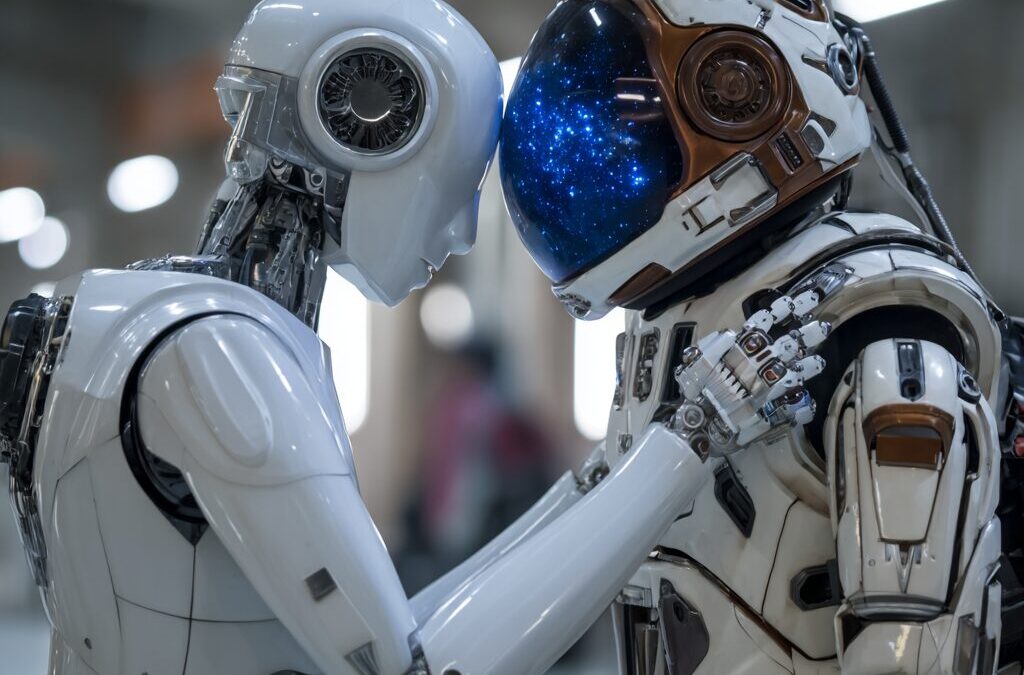
Crypto-Powered Robotics: Will Tokens Drive Human–Robot Collaboration?
Introduction
Imagine a future where your household robot receives a paycheck in crypto. Instead of a wage slip, it gets tokens directly deposited into its digital wallet, rewarding it for cleaning your home, delivering groceries, or assisting with elderly care. In warehouses, autonomous robots might negotiate micro-payments with one another for completing tasks, while blockchain ensures every interaction is transparent and tamper-proof.
This is the vision of crypto-powered robotics: a system where blockchain-based tokens act as incentives, enabling a new kind of collaboration between humans and machines. While the model promises efficiency, fairness, and innovation, it also raises pressing ethical questions about labor, ownership, and even the rights of robots.
The Rise of Tokenized Economies
Tokenization is reshaping the digital economy. In finance, tokens already represent assets, identities, and rights. In gaming, tokens power play-to-earn ecosystems. In supply chains, they certify authenticity.
Robotics is the next frontier. By linking robots to token economies, we can:
-
Assign economic value to their labor.
-
Create self-sustaining machine ecosystems.
-
Enable micro-transactions between robots and humans.
The shift mirrors how gig economy platforms like Uber or DoorDash pay human workers per task. The difference? Here, the worker is a robot, and the currency is a crypto token on blockchain rails.
How Tokens Enable Human–Robot Collaboration
1. Robots as Paid Service Providers
Robots could earn tokens for completing tasks — whether stacking shelves, delivering packages, or assisting in homes. Payment is instant, trustless, and verifiable.
2. Machine-to-Machine (M2M) Commerce
Robots might also transact with one another. A delivery drone could pay a charging station robot for energy, or a factory robot could buy replacement parts autonomously using tokens.
3. Incentive Alignment
Token rewards could align robot actions with human objectives. For example, warehouse bots might receive extra tokens for completing tasks faster or more safely.
4. Programmable Paychecks
Smart contracts could enforce rules: bonus tokens for efficiency, penalties for errors, or automated tax/maintenance deductions.
Real-World Use Cases Emerging
-
Warehouses & Logistics
Amazon-style warehouses already rely on fleets of robots. With tokens, each bot could be “paid” for tasks, enabling dynamic coordination without a centralized manager. -
Delivery Robots
Food delivery bots could accept payments in stablecoins, distributing revenue to their owner and covering maintenance fees directly. -
Healthcare & Elder Care
Assistance robots could log hours of service and be rewarded with tokens that cover upgrades, software patches, or even insurance contracts. -
Smart Cities
Public service robots (street-cleaning, recycling, surveillance) could be funded via municipal tokens, ensuring accountability to taxpayers.
Benefits of Tokenized Robotics
-
Efficiency & Transparency
Blockchain ensures every task and payment is logged, eliminating disputes over whether a job was completed. -
Autonomy & Self-Sustainability
Robots could cover their own expenses (energy, parts, cloud services) without human intermediaries. -
Scalable Ecosystems
Large networks of robots can collaborate using decentralized protocols, coordinating without central oversight. -
Human–Robot Trust
Token incentives act as a clear, measurable contract between humans and machines, reducing ambiguity in collaboration.
Ethical and Social Dilemmas
While the benefits are exciting, tokenized robotics opens a Pandora’s box of ethical debates:
-
Who Owns the Wages?
If a robot earns tokens, do they belong to the robot, its owner, or the manufacturer? -
Robot Rights or Tools?
At what point do payment systems blur the line between machines as tools and machines as independent workers? -
Human Labor Displacement
Tokenized robots could accelerate automation, replacing low-wage jobs at scale. Will displaced workers also be given tokens to participate in the new economy? -
Algorithmic Inequality
Wealthy corporations may deploy more robots, amassing tokens faster and deepening inequality. -
Regulatory Gray Zones
Can robots be taxpayers? Should their token incomes be reported? Lawmakers are far from having answers.
The Role of Blockchain in Accountability
Blockchain doesn’t just enable payments — it ensures auditable, immutable records of robot activity.
-
Verification: Every task a robot completes can be time-stamped and logged.
-
Dispute Resolution: If a human disputes a robot’s service, blockchain provides proof-of-work.
-
Governance: Decentralized Autonomous Organizations (DAOs) could oversee fleets of robots, distributing token rewards based on performance.
For example, a “Robotics DAO” could manage hundreds of delivery bots in a city, pooling revenue into a treasury and paying robots (or their owners) in proportion to tasks completed.
Early Experiments and Signals
-
Fetch.ai: Developing autonomous economic agents for logistics and DeFi integration.
-
Ocean Protocol: Allows AI/robotic systems to buy/sell data with tokens.
-
SingularityNET: Focused on creating decentralized marketplaces for AI services — robots could plug into this to buy intelligence upgrades.
These projects hint at a future where robots are not just tools but active economic agents, plugged into the tokenized web of value.
Challenges Ahead
-
Technical Hurdles
-
Robots need secure, lightweight wallets.
-
Smart contracts must handle complex service agreements.
-
Scalability for millions of micro-transactions.
-
-
Security Risks
-
Bot wallets could be hacked.
-
Malicious code could divert token flows.
-
Smart contracts are only as safe as their code.
-
-
Legal Uncertainty
-
Current labor and tax laws don’t account for non-human workers.
-
Ownership rights over tokens earned by robots remain undefined.
-
-
Social Resistance
-
Public fear of robots “taking jobs.”
-
Skepticism toward crypto-based payments in mainstream adoption.
-
The Future of Human–Robot Collaboration
Looking ahead, tokenized robotics could reshape work and society in profound ways:
-
Humans as Partners, Not Bosses
Robots could become economic collaborators, not just subordinates, with tokens creating a shared incentive structure. -
Universal Basic Robotics?
Governments might tax robot tokens to fund Universal Basic Income (UBI) for humans displaced by automation. -
Self-Ownership
Advanced AI robots may one day claim full ownership of their wallets — raising philosophical questions about digital personhood. -
Hybrid Workforces
Factories, cities, and homes may soon host blended teams of humans and robots, each rewarded through tokenized systems.
Conclusion
Crypto-powered robotics represents a bold step into the future of work, collaboration, and economic design. By using blockchain-based tokens as the “paychecks” of tomorrow, robots could become more autonomous, accountable, and integrated into human systems.
Yet this future is not without challenges. Questions of ownership, fairness, and regulation loom large. Will tokenized incentives strengthen trust and productivity, or accelerate inequality and ethical dilemmas?
The truth is likely both. Just as industrial robots reshaped manufacturing, crypto-powered robots will reshape labor itself. The challenge for policymakers, innovators, and society is to design token economies that foster not just efficient machines — but equitable human–robot collaboration.

Crypto Rich ($RICH) CA: GfTtq35nXTBkKLrt1o6JtrN5gxxtzCeNqQpAFG7JiBq2
CryptoRich.io is a hub for bold crypto insights, high-conviction altcoin picks, and market-defying trading strategies – built for traders who don’t just ride the wave, but create it. It’s where meme culture meets smart money.
