
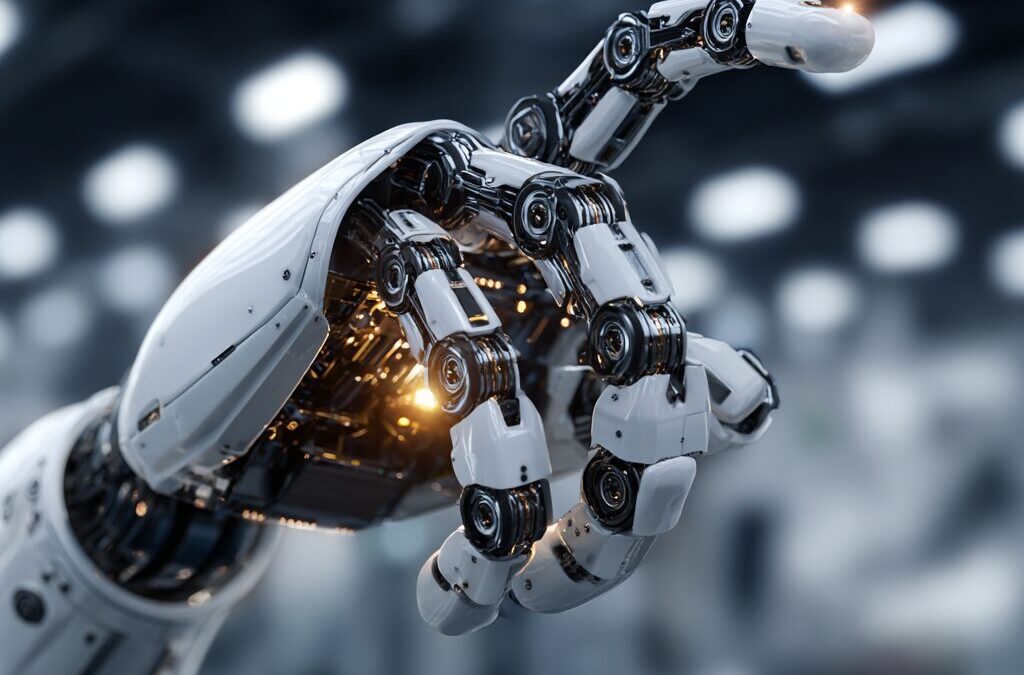
AI Robotics and Blockchain: The Smart Factory of the Future
Introduction
Industrial manufacturing is entering a new era. For over a century, factories have relied on incremental improvements to automation, logistics, and labor efficiency. Today, however, we stand on the brink of a transformation far more profound: the convergence of artificial intelligence (AI), robotics, and blockchain technology.
AI-driven robots are already revolutionizing production by handling repetitive tasks, analyzing data, and predicting maintenance needs with accuracy that far outpaces human operators. At the same time, blockchain provides a decentralized backbone for secure transactions, tamper-proof records, and transparent supply chains. Together, these technologies form the foundation of the smart factory of the future — an ecosystem where machines operate autonomously, collaborate seamlessly, and maintain accountability without central oversight.
The Evolution of Manufacturing Automation
The journey from Henry Ford’s assembly line in 1913 to today’s robotic arms has been remarkable. Early automation relied on mechanical precision, later enhanced by digital controls. By the late 20th century, industrial robots were staples in automotive and electronics factories.
With the rise of AI and machine learning, these robots have grown more intelligent. They can now:
-
Perform predictive maintenance by identifying wear-and-tear before breakdowns occur.
-
Adapt to variability in materials or designs using computer vision.
-
Optimize processes by analyzing vast amounts of real-time data.
Yet, traditional automation systems remain largely centralized. A breakdown in one part of the system can ripple across the entire supply chain. Data silos, lack of trust between suppliers, and vulnerability to manipulation still plague global manufacturing. This is where blockchain enters the picture.
Blockchain in the Factory: Beyond Cryptocurrencies
When most people hear “blockchain,” they think Bitcoin. But in manufacturing, blockchain’s value lies in its ability to secure and decentralize information flows.
Key benefits of blockchain for factories include:
-
Immutable Records: Every stage of production — from sourcing raw materials to assembly — can be permanently logged. This prevents fraud and ensures authenticity.
-
Transparent Supply Chains: Consumers and regulators can verify claims like “sustainably sourced” or “Made in USA” with cryptographic certainty.
-
Smart Contracts: Self-executing contracts automate payments for raw materials, shipping, and even machine-to-machine services.
-
Decentralized Trust: No single party controls the ledger, reducing disputes between manufacturers, suppliers, and distributors.
For instance, IBM’s Food Trust blockchain already tracks food products across global supply chains, ensuring safety and authenticity. A similar approach applied to smart factories could verify every component, every step of assembly, and every quality test — all in real time.
The Power of Convergence: AI + Robotics + Blockchain
The real magic happens when these technologies work together.
-
Autonomous Robots: Imagine AI-powered robots on a factory floor making decisions about assembly speed or part sourcing. Their actions are verified and logged on blockchain, ensuring accountability.
-
Secure Data Sharing: Factories, suppliers, and logistics providers can share sensitive data without fear of tampering or leaks. AI analyzes the data, while blockchain secures it.
-
Verifiable Transactions: Robots could automatically order spare parts, negotiate contracts, or purchase energy on tokenized microgrids using blockchain smart contracts.
-
Predictive Efficiency: AI identifies bottlenecks or looming failures, while blockchain ensures that corrective actions are transparent and auditable.
In short, AI provides the intelligence, robotics provide the action, and blockchain provides the trust.
Real-World Applications in Smart Factories
-
Supply Chain Tracking: Every raw material can be traced from source to factory to consumer, logged immutably on blockchain. Counterfeit components can be eliminated.
-
Quality Control: AI-driven vision systems detect defects in milliseconds. Blockchain stores inspection results, ensuring accountability throughout production.
-
Energy Optimization: Factories can operate on decentralized energy markets. Robots equipped with IoT sensors negotiate energy purchases directly from tokenized renewable grids.
-
Maintenance Logs: Instead of paper reports or vulnerable digital files, robots register maintenance events on blockchain. Regulators, manufacturers, and partners can verify the history instantly.
Example: Siemens’ Digital Factory Division already integrates AI robotics with blockchain pilots for energy trading. In the near future, we may see Tesla’s Gigafactories logging every production step and energy use event on-chain.
Benefits of the AI + Blockchain Factory Model
-
Higher Efficiency & Reduced Downtime
Predictive AI ensures machines don’t fail unexpectedly, while blockchain automates spare parts ordering. -
Fraud & Data Manipulation Elimination
Immutable ledgers prevent cover-ups of quality failures or fraudulent certifications. -
Trust Across the Ecosystem
Every stakeholder — from supplier to consumer — sees a shared, verified version of events. -
Democratization of Robotics
Tokenization allows investors or smaller manufacturers to buy fractional ownership in robotic fleets, opening automation to new players.
Challenges and Risks
-
Technical Integration: AI platforms and blockchain networks must interoperate smoothly — not easy in today’s fragmented ecosystem.
-
Cost & Scalability: Blockchain transactions can be resource-intensive. Factories will need efficient, scalable solutions.
-
Data Privacy & Compliance: While transparency is a strength, it must be balanced with regulatory requirements like GDPR.
-
Cybersecurity: Robots remain vulnerable at the hardware and network layer, even if blockchain secures the data.
Without addressing these, adoption could stall or fragment into incompatible silos.
The Future of Smart Factories
Looking ahead, several trends stand out:
-
Self-Owning Robots: Using crypto wallets, robots could pay for their own upkeep, purchase parts, and sell services.
-
Decentralized Autonomous Factories (DAFs): Entire factories could be governed by blockchain-based smart contracts, with minimal human oversight.
-
Global Robotic Trade Networks: Robots across countries could transact directly in crypto tokens, creating a new layer of international commerce.
-
Human + Robot Co-Creation: Humans provide creativity and oversight, while robots manage operations in an auditable, tokenized ecosystem.
This vision is not far-fetched. Companies like Fetch Robotics, Fanuc, and blockchain innovators like VeChain are already moving toward aspects of this model.
Conclusion
The fusion of AI robotics and blockchain is more than a technological upgrade — it’s the foundation of Industry 5.0. In this future, factories are not just automated but also transparent, decentralized, and self-sustaining.
AI gives machines the ability to think and learn. Robotics gives them the ability to act. Blockchain ensures their actions are trusted and verified. Together, they form the smart factory of tomorrow — a place where efficiency meets accountability, and where trust is hard-coded into every transaction.
The next wave of industrial transformation is here. The question is not whether businesses will adopt AI robotics and blockchain, but how quickly they will adapt — and who will lead the charge into this decentralized, intelligent manufacturing future.

Crypto Rich ($RICH) CA: GfTtq35nXTBkKLrt1o6JtrN5gxxtzCeNqQpAFG7JiBq2
CryptoRich.io is a hub for bold crypto insights, high-conviction altcoin picks, and market-defying trading strategies – built for traders who don’t just ride the wave, but create it. It’s where meme culture meets smart money.
